
AIRCRAFT
Aircraft configuration
Review aircraft suitability, condition and maintenance requirements for the task. Consider the configuration, power systems and operating limits alongside the weight and behaviour of the proposed load.
Drone lifting is a specialist operation. The right starting point is understanding the load, the site and the risks.
A suitable aircraft is one part of the plan. Load handling, site controls, weather, people and permissions all need to be considered together before an operation can proceed.
Review aircraft suitability, condition and maintenance requirements for the task. Consider the configuration, power systems and operating limits alongside the weight and behaviour of the proposed load.
Check the suitability and rated limits of the lifting hardware. Attachment points, sling condition, load balance and the lowering or release method all affect how the cargo is handled.
Understand the positioning and sensing systems fitted to the actual aircraft, including their limitations. Plan around surrounding obstacles and the suspended load rather than relying on automation alone.
Plan controlled collection and delivery areas, crew positions and communication methods. Consider people, property and other site activities, with a shared briefing and arrangements for managing unexpected changes.
Assess wind, gusts, visibility and precipitation against the aircraft and operation limits. Account for local effects around buildings, trees and terrain, and review conditions as the proposed task develops.
Identify the authorisations, airspace permissions and land access arrangements required for the operation. Review insurance and operating documentation, and confirm the relevant conditions can be met before work proceeds.
Aircraft, lifting hardware, ground crew and site controls need to work as one system. The proposed load and route shape the equipment requirements, preparation and communication plan.
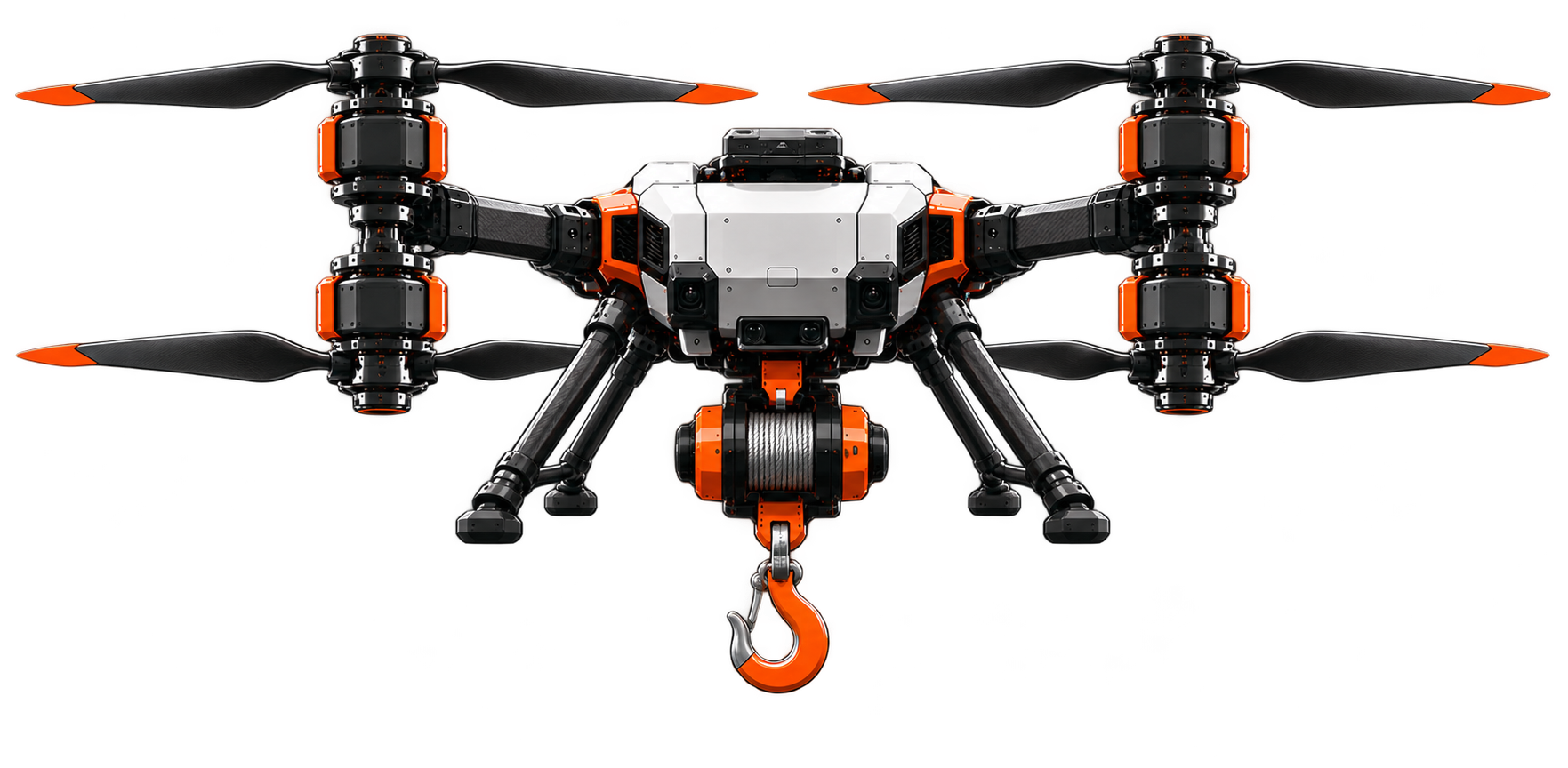
Payload capacity will be published once the aircraft specification is confirmed. Suitability for an individual lift will also depend on the load’s dimensions, attachment method, route and operating conditions. Include weight and dimensions with any initial enquiry.
Rooftop delivery may be possible for suitable loads and sites. The assessment needs to consider the building, the receiving area, load control, nearby people and the permissions required. A clear photograph or plan of the destination is a useful starting point.
Navigation and sensing capabilities depend on the aircraft and its fitted systems. They do not remove the need to assess obstacles, clearances and the movement of a suspended load.
Weather limits depend on the aircraft, lifting equipment and planned operation. Gusts, turbulence, visibility and precipitation may affect whether a lift can proceed. Project timing should allow for reassessment, delays or postponement if conditions are unsuitable.
Requirements depend on the aircraft, location and proposed operation. Any necessary CAA authorisation, airspace permissions and site access arrangements must be in place before work proceeds.
There is no reliable blanket comparison. Cost depends on the load, access, mobilisation, planning and equipment needed. Assessing those factors together is more useful than comparing headline rates, and a conventional lifting method may be the better option.